Woman Muslim Eating Noodles at Night: A Versatile Visual Resource for Inclusive, Culturally Aware Design
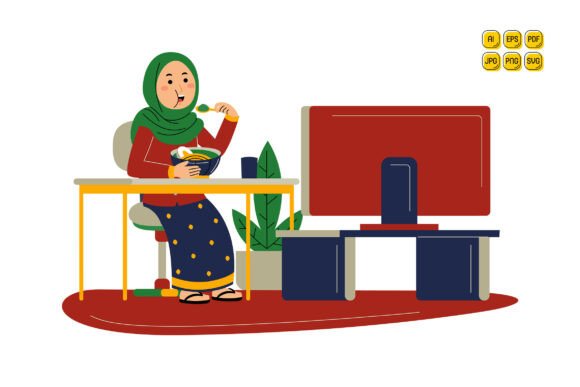
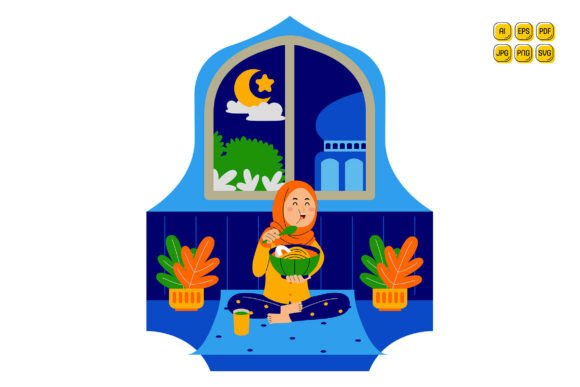
“Woman Muslim Eating Noodles at Night” is more than a descriptive phrase—it’s the foundation of a purpose-built, culturally grounded visual asset library designed for designers, marketers, educators, and brand creators who value authenticity, flexibility, and intentionality. This collection features 100 original, high-resolution vector illustrations centered around a relatable, everyday moment: a Muslim woman enjoying noodles during the quiet hours of the evening. Thoughtfully composed with modest attire, warm lighting, and calm ambiance, each illustration reflects dignity, normalcy, and cultural nuance—without stereotyping or tokenism.
For professionals building inclusive digital experiences, this resource answers a real need: the consistent lack of diverse, editable, and contextually appropriate imagery that represents Muslim women in ordinary, human-centered moments—not just ceremonial or religious settings. Too often, stock libraries offer either overly generic figures or narrowly framed depictions that miss the richness of daily life. “Woman Muslim Eating Noodles at Night” bridges that gap by grounding representation in realism, respect, and design utility.
Why This Moment Matters—and Why It’s Designed for Adaptability
Eating noodles at night is universally recognizable: it’s comforting, personal, and quietly intimate. For many, it’s tied to late-night study sessions, post-iftar relaxation during Ramadan, solo self-care, or shared moments with family. By anchoring the visuals in this gentle, human activity, the collection avoids performative diversity and instead supports authentic storytelling—whether you’re illustrating mental wellness content, food delivery apps, student wellness programs, or halal lifestyle blogs.
The true power lies in its technical and creative flexibility. Every illustration arrives in multiple industry-standard formats—including AI, EPS, SVG, PDF, JPG, and PNG—with transparent background support and a generous 5000 × 5000 pixel canvas. That means you can scale a single noodle bowl icon from a mobile app button to a 10-foot trade show banner without quality loss. More importantly, every shape—from hijab folds to chopstick angles—is fully layered and editable in Adobe Illustrator. You can adjust skin tones, swap noodle types (ramen, udon, soba), recolor clothing to match brand palettes, or isolate elements to build custom scenes.
Real-World Applications Across Industries
This isn’t just clipart—it’s a strategic design toolkit. Here’s how different users apply it meaningfully:
- Brands launching halal-certified food products use the illustrations to visualize nighttime snacking habits in social media carousels, packaging mockups, and influencer campaign assets—ensuring their messaging resonates with Muslim consumers’ lived rhythms.
- Educational platforms and mental health apps integrate these visuals into modules about sleep hygiene, stress-eating awareness, or mindful nutrition—replacing clinical or gender-neutral icons with warm, identity-affirming representations.
- Websites and landing pages benefit from culturally specific hero graphics that improve relatability and trust. A softly lit “Woman Muslim Eating Noodles at Night” scene on a wellness coaching site signals inclusion before the first sentence is read.
- Nonprofits and community organizations adapt the illustrations for infographics about food security, late-shift worker support, or Ramadan wellness—using color shifts and layout variations to tailor tone across audiences (e.g., muted blues for clinical reports, warm ambers for social media).
- Content creators and educators combine individual elements—like a steaming bowl + open laptop + soft lamp—to build custom storyboards for digital literacy workshops, intercultural communication training, or university DEI resources.
Designing with Intention: Practical Considerations
Because inclusivity begins with attention to detail, these illustrations were developed with input from Muslim women across age groups and geographies. Modesty is expressed through natural draping—not rigid silhouettes. Hairstyles, hijab styles, and accessories reflect regional variety (e.g., shayla, al-amira, turban wraps). Backgrounds are intentionally minimal or customizable, avoiding assumptions about home environments while allowing easy integration into branded layouts.
When adapting the artwork, consider your audience’s expectations and context. A healthcare provider might soften colors and add subtle medical icons (e.g., a thermometer overlay) for a patient education handout. A food delivery startup may emphasize vibrant noodle textures and bold typography for Instagram ads. An academic publisher could extract line-art versions for textbook diagrams on nutrition timing or circadian eating patterns.
Also remember: editing doesn’t require advanced skills. The layered AI files include clearly labeled groups (e.g., “Hijab,” “Bowl,” “Steam,” “Background Elements”), so even beginners can swap colors using Illustrator’s Recolor Artwork tool or isolate components with the Selection tool. Need a version with glasses? Just duplicate the face layer and add your own SVG eyewear. Want to show shared dining? Combine two figures from different illustrations—both built on the same grid and perspective system for seamless alignment.
Getting Started: From Download to Delivery
Once downloaded, you’ll receive all 100 illustrations organized by theme—such as “Solo Evening Meals,” “Study & Snack,” “Family Kitchen Moments,” and “Ramadan Nights.” Each file includes consistent naming conventions (e.g., WN_Night_Solo_Bowl_Ramen_AI.ai) and preview thumbnails for quick scanning. No fonts or external links are embedded—everything is self-contained and production-ready.
Before finalizing, test key variants across devices and use cases: view PNGs on dark-mode interfaces, check SVG scalability on responsive websites, and print PDFs at 300 DPI for brochures. Because the base resolution is 5000 × 5000 pixels, you’ll retain crisp clarity whether scaling down to 400 × 400 for avatars or up for large-format signage.
And because needs evolve, the collection is built for iteration—not replacement. Add seasonal elements (a steaming mug for winter, citrus garnish for summer), translate text labels into Arabic or Urdu using included placeholder layers, or animate steam using the SVG paths in web projects. This isn’t static art—it’s infrastructure for ongoing, respectful visual communication.
Whether you’re refreshing a brand’s visual language, supporting a community initiative, or designing for global accessibility, “Woman Muslim Eating Noodles at Night” offers both creative freedom and cultural fidelity. It’s not about checking a box—it’s about making space, with care, for stories that have long been underrepresented in design systems. Happy designing. Happy purchasing.