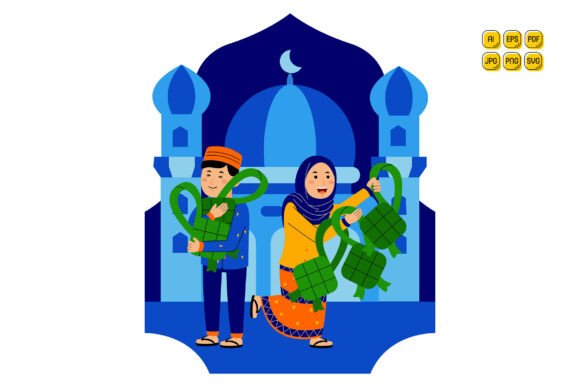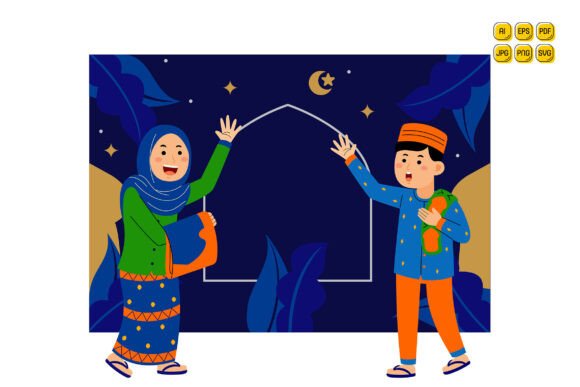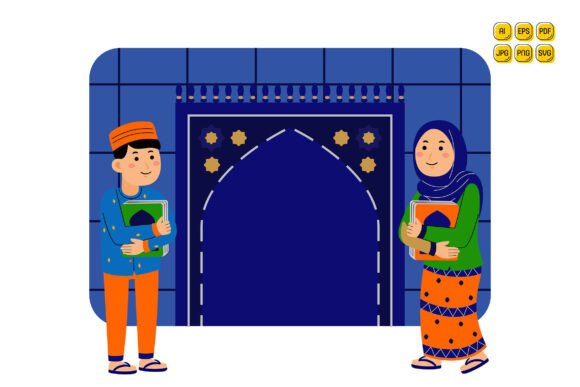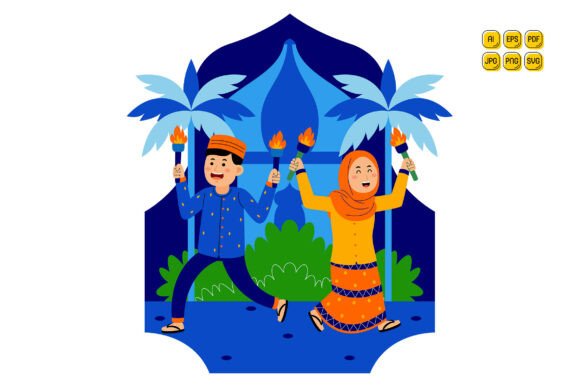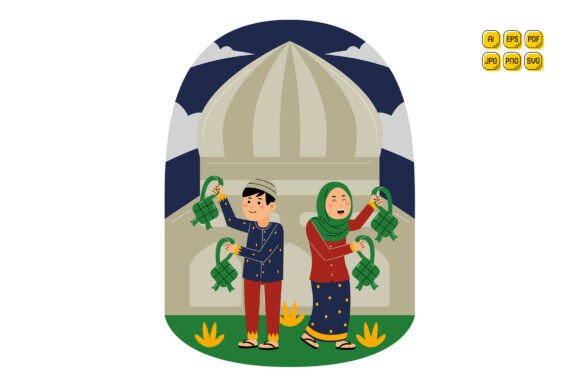
Muslim Couple Holding Charity Bags
In today’s visually driven digital landscape, authenticity and cultural resonance matter more than ever—especially when communicating values like compassion, community, and shared responsibility. The Muslim Couple Holding Charity Bags illustration isn’t just a static image; it’s a versatile, values-aligned visual asset designed for real-world application across business, education, faith-based outreach, and creative projects. Its strength lies not in decoration, but in intention: representing generosity, partnership, and quiet dignity in action.
Why This Visual Fits Modern Communication Needs
Consumers and audiences increasingly expect brands and organizations to reflect inclusive, purpose-driven narratives—not through slogans alone, but through thoughtful, culturally aware visuals. A Muslim couple depicted respectfully, engaged in charitable giving, meets that expectation without cliché or tokenism. Unlike generic stock imagery, this set is built for adaptability: flat design ensures clarity at any scale, while vector formatting means no pixelation when used on a mobile ad, printed poster, or interactive website banner.
This aligns with broader shifts in digital content creation. Designers, marketers, and educators are moving away from one-size-fits-all assets toward modular, editable libraries—where a single illustration can be reconfigured for multiple contexts. For example, the same base composition can become:
- A warm hero section on a nonprofit’s donation landing page—colors adjusted to match brand guidelines;
- An infographic element showing “community-led giving” in an educational toolkit for Islamic schools;
- A social media carousel slide highlighting Ramadan initiatives, with added Arabic calligraphy or mosque silhouettes layered in;
- A printable flyer for a local food drive, where clothing colors are changed to reflect seasonal themes (e.g., green and gold for Eid, soft blues for winter campaigns).
That flexibility isn’t incidental—it’s engineered into the file structure. Each shape—clothing folds, bag handles, facial features, even background elements—is individually selectable and recolorable in Illustrator, EPS, SVG, or PDF formats. No raster masking or destructive editing required.
Evolving Expectations Around Representation
Five years ago, finding accurate, respectful, and production-ready illustrations of Muslim families in everyday positive contexts was difficult. Many available options leaned heavily on symbolism (mosques, crescents) rather than lived experience—or worse, relied on outdated stereotypes. Today, creators, educators, and faith-based organizations demand nuance: modest yet contemporary dress, gender-equal partnership in service, and warmth without theatricality.
The Muslim Couple Holding Charity Bags collection responds directly to that need. It avoids caricature by focusing on gesture and context: hands extended, bags held with care, posture open and grounded. There’s no exaggerated expression or forced narrative—just presence and purpose. That restraint makes it more adaptable, not less. A marketer promoting a halal-certified product line can use the same illustration to signal ethical alignment; a teacher building empathy lessons can use it to spark discussion about civic responsibility across cultures.
Practical Use Across Real Workflows
For professionals managing tight timelines and limited design resources, speed and consistency are non-negotiable. This set delivers both. With 100 unique vector illustrations included, users aren’t limited to one pose or composition. Variations include different bag types (reusable cloth, woven baskets, branded tote), subtle attire adjustments (abayas, kurtas, hijabs in varied draping), and inclusive age cues—making it possible to represent intergenerational involvement without switching asset libraries.
Consider a freelance graphic designer building a brand identity for a new Islamic financial literacy initiative. They might combine one illustration with custom typography and a gradient overlay to create a cohesive visual language across Instagram posts, email headers, and webinar slides—all while maintaining color harmony and message clarity. Or a small business owner launching a socially conscious apparel line could use the PNG version with transparent background as a watermark on product mockups, then switch to SVG for responsive web use.
Even educators benefit: the high-resolution JPG (5000 × 5000 px) prints crisply on large classroom posters, while the SVG format embeds cleanly into interactive e-learning modules—no loss of fidelity when zoomed or animated.
What You Actually Get—and Why It Matters
This isn’t a single illustration sold as a “pack.” It’s a production-ready toolkit built for longevity and reuse:
- 100 Vector Illustrations: Not duplicates—each offers meaningful variation in pose, bag style, attire, or composition;
- Multiple File Formats: AI and EPS for full editability in professional design workflows; SVG for modern web development; PDF for universal sharing; JPG and PNG for immediate use in presentations or ads;
- Flat Design Style: Clean lines, intentional negative space, and balanced proportions ensure readability across devices and accessibility-friendly contrast;
- 5000 × 5000 Pixel Resolution: Scales down flawlessly for thumbnails or up for wall-sized prints—no interpolation artifacts;
- True Editability: Every shape, stroke, and fill is layered and labeled—no grouped or flattened objects hiding complexity.
That last point is critical. Many “editable” assets still require hours of ungrouping, cleaning, or rebuilding. Here, customization starts with a click—not a workaround.
Trends Supporting This Kind of Asset
Three converging trends make collections like this increasingly valuable:
- Modular Visual Systems: Brands no longer rely on isolated hero images. They build visual ecosystems—where icons, illustrations, and photography share tone, proportion, and palette. This set functions as a foundational piece in such a system.
- Localization Without Translation: Global audiences respond better to visuals that reflect their lived reality—not just language, but dress, setting, and social dynamics. A Muslim couple engaging in charity work resonates across diverse Muslim-majority and minority communities alike.
- Time-Conscious Creativity: With rising content demands across platforms, professionals need assets that reduce iteration time—not add to it. Being able to recolor, resize, and remix in minutes supports sustainable creative output.
None of this replaces thoughtful strategy or audience research. But it removes friction between intention and execution—letting mission-driven messages land clearly, consistently, and respectfully.
Who Benefits Most—and How
Freelancers and agencies gain efficiency: fewer custom illustration requests, faster client revisions, stronger portfolio diversity. Educators gain teaching tools that affirm identity while reinforcing universal values. Nonprofits gain campaign assets that feel human—not corporate—without sacrificing polish. Bloggers and content creators gain social-ready visuals that stand out in crowded feeds without relying on overused tropes.
And for Muslim-owned businesses or community initiatives? It’s more than convenience—it’s representation you control. You choose the colors, the context, the emphasis. You decide whether the couple appears in a city street, a community center, or abstract space—because the files support layering and integration, not isolation.
That level of agency matters. It reflects a larger shift: from passive consumption of imagery to active curation of meaning. And it starts with assets built not just to look good—but to serve, adapt, and endure.