Ramadan Kareem Greeting Card 02: A Flexible Vector Resource for Designers and Marketers
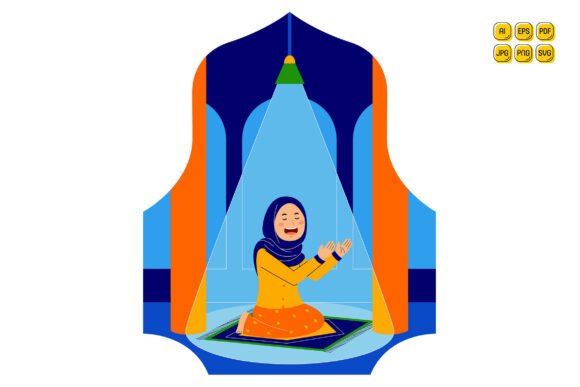
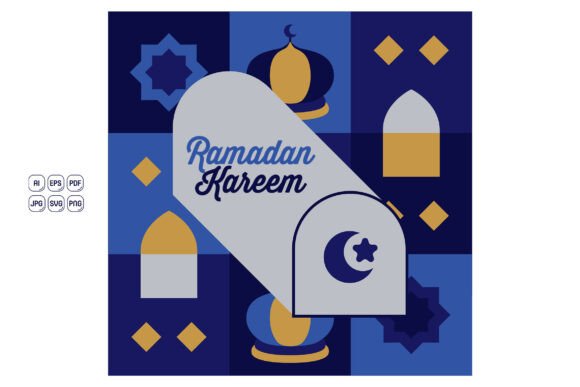
Ramadan Kareem Greeting Card 02 is a professionally crafted digital asset designed for visual communication during the holy month of Ramadan. It consists of a curated set of 100 vector illustrations in flat design style, delivered in multiple industry-standard formats—including AI, EPS, SVG, PDF, JPG, and PNG—with a maximum resolution of 5000 × 5000 pixels. Unlike static image files, these vectors are fully editable: users can resize without quality loss, adjust individual shapes, recolor elements independently, and combine components to build custom compositions.
This resource is intended for professionals and teams who require adaptable, on-brand visual content across diverse applications—such as social media campaigns, email newsletters, website banners, landing pages, printed greeting cards, infographics, and internal or client-facing presentations. Its structure supports both rapid deployment and iterative refinement, making it relevant for designers, marketing coordinators, small business owners, and agencies managing seasonal outreach.
Why Designers and Marketers Consider This Asset
Seasonal design work often demands speed, consistency, and flexibility. Ramadan Kareem Greeting Card 02 addresses those needs by offering ready-to-use vector elements that retain full editability. For example, a marketing team launching a Ramadan promotion can use the same base illustration across Instagram carousels (SVG or PNG), email headers (JPG or PNG), and printed flyers (PDF or AI), adjusting colors to match brand guidelines each time. The ability to isolate and recolor individual shapes—like lanterns, crescent moons, or ornamental borders—means no reliance on external editing tools for basic customization.
Additionally, the inclusion of transparent-background PNGs and scalable SVGs supports responsive web use, while high-resolution JPG and PDF files meet print requirements. The flat design aesthetic ensures clarity at small sizes (e.g., mobile app icons) and visual cohesion when layered with photography or typography.
Practical Benefits and Realistic Expectations
The primary benefit lies in efficiency: users avoid starting from scratch for common Ramadan-related visuals. Each of the 100 illustrations is pre-aligned, well-structured, and organized in layers, reducing time spent on foundational layout work. Compatibility with Adobe Illustrator means integration into existing design workflows is straightforward, especially for teams already using Creative Cloud.
However, users should expect a learning curve if unfamiliar with vector layer management in Illustrator. While the files are editable, meaningful customization—such as repositioning complex groups or modifying intricate patterns—requires intermediate proficiency. The flat design style also imposes aesthetic constraints: it does not simulate texture, depth, or photorealism, which may limit suitability for brands seeking more illustrative or hand-drawn expressions.
Color adjustment is supported, but the palette is not pre-configured for accessibility contrast. Designers must verify legibility—especially for text overlays or foreground elements against background shapes—before final use. Likewise, while resizing is lossless, extreme scaling down (e.g., below 200 × 200 px) may obscure fine details in ornamental elements.
When This Resource Fits Well
Ramadan Kareem Greeting Card 02 is a strong fit for teams managing time-bound, multi-channel campaigns where visual consistency matters. It works well for businesses targeting Muslim-majority markets—or inclusive global audiences—during Ramadan, such as halal food brands, Islamic financial institutions, educational platforms, or e-commerce retailers offering seasonal promotions.
It also suits designers maintaining reusable brand libraries. Because each shape remains independent, elements can be archived, tagged, and repurposed across future projects—not just for Ramadan, but for broader cultural or spiritual themes where motifs like crescents, stars, or calligraphic flourishes remain relevant.
Small studios or solo designers handling multiple clients benefit from the variety: having 100 distinct yet stylistically unified illustrations reduces the need to source or license additional assets for similar contexts.
When Alternatives May Be More Appropriate
Organizations with highly specific brand guidelines—especially those requiring bespoke illustration styles, custom iconography, or culturally nuanced symbolism—may find pre-made vectors limiting. In such cases, commissioning original artwork ensures alignment with voice, audience expectations, and regional sensitivities (e.g., variations in calligraphic tradition or motif interpretation across geographies).
Teams lacking vector-editing capability—or relying exclusively on no-code tools like Canva—may struggle with AI or EPS files. While SVG and PNG versions are usable there, the full customization potential (e.g., per-shape recoloring) is inaccessible without desktop vector software.
For one-off uses—such as a single social post or internal memo—a simpler, royalty-free stock graphic might suffice and carry lower cost or licensing overhead. Similarly, developers integrating interactive elements may prefer lightweight SVGs built in code rather than imported Illustrator exports, particularly when animation or dynamic color switching is required.
Making an Informed Decision
To determine whether Ramadan Kareem Greeting Card 02 aligns with your goals, consider three practical questions:
- What is your output scope? If you need consistent visuals across five or more formats (web, print, social, email), and anticipate reusing or adapting core elements over time, the versatility of this package adds measurable value.
- What is your technical capacity? Confirm access to Adobe Illustrator (or compatible software) and comfort editing layered vector files. Review sample file structures—if available—to assess organization and naming conventions.
- What level of cultural resonance do you require? Evaluate whether the included motifs reflect your audience’s expectations. Flat design offers neutrality, but some communities may prioritize traditional illumination, regional architectural references, or specific calligraphic forms not represented here.
Finally, compare delivery scope with alternatives: a smaller pack of 20 vectors may meet minimal needs at lower cost, while a subscription-based design library could offer broader seasonal coverage—but with less ownership and fewer export options. Ramadan Kareem Greeting Card 02 sits between those extremes: a finite, owned asset optimized for focused, repeatable application.
In summary, this resource serves best as a production accelerator—not a creative substitute. Its value emerges not in isolation, but as part of a deliberate workflow where editability, format breadth, and stylistic coherence directly support operational and communicative objectives.